How to play Valorant like a satisfying Phoenix main with movement and aim drills
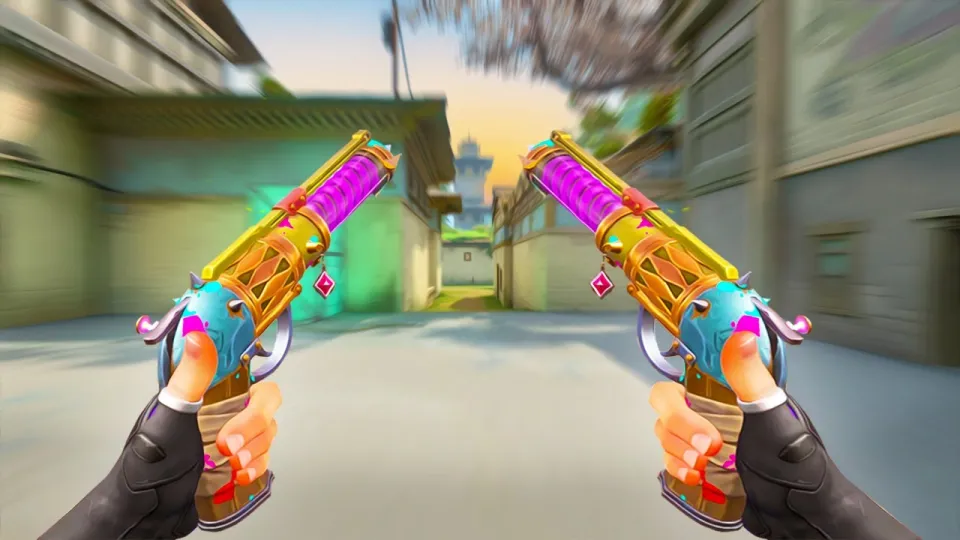
Video: 20 Minutes of Satisfying Valorant Clips
Need articles like this for your video? They help promote it on YouTube and Google — order them in the Telegram bot @sat_sit_bot. It writes articles around your video, embeds the video and publishes them on popular niche websites (no ads). Try it free: 50 articles on us.
· based on the channel Rawzu
Valorant is a 5v5 tactical shooter where two teams of five fight over a spike, and the fastest way to improve is to copy the habits of players who already win duels consistently. To play Valorant like a satisfying Phoenix main, you combine the duelist's flash-and-wall kit with disciplined movement, a stable sensitivity, and a crosshair you can trust in every fight. The clips from Rawzu's 20-minute montage show exactly how that package looks in ranked: fast entries, clean one-taps, and teammates hyping every ace. If you want to watch that style live, Rawzu streams daily at kick.com/rawzu.
What makes Phoenix a strong pick in Valorant
Phoenix is an offensive duelist built to hunt enemies while crippling their ability to fire back, which is why he rewards players who push first instead of waiting for someone else to open the site. His kit has four parts, and each one solves a different problem:
- Blaze creates a wall that blocks vision and deals damage, letting Phoenix cross open areas that would otherwise be watched by an Operator.
- Curveball throws a flash that curves around geometry, so it can blind enemies even when they are hiding behind corners.
- Hot Hands throws a fireball that damages and heals Phoenix when it lands, giving him sustain during a fight.
- Run it Back is the ultimate: Phoenix marks his position and, if he dies during the duration, respawns at the mark with full health.
Because Hot Hands and Run it Back both extend his effective health pool, Phoenix can take duels that would kill other duelists. That is the core reason aggressive players enjoy him: you are not punished as harshly for being first through the door.
How to set sensitivity, resolution and crosshair for Valorant
Your settings decide how repeatable your aim is, so lock them in before you grind ranked. Rawzu's configuration is a good reference point because it is built around consistency rather than flashy numbers:
- Sensitivity: 400 DPI with 0.625 in-game, which works out to roughly 250 eDPI.
- Resolution: 1440x1080, a stretched 4:3-style aspect that widens enemy models on screen.
- Crosshair: code 1-6-2-2, a compact static crosshair that stays readable on any map.
- Mouse: Lamzu Maya X.
- Mousepad: Zowie H-SR-SE 2 Blue.
- Monitor: Zowie XL2566K running at 360Hz.
If you copy these values, change one variable at a time and give each change at least a week. Switching sensitivity daily destroys the muscle memory that makes one-taps feel automatic.
Movement and aim habits behind satisfying Valorant clips
The satisfying part of a Valorant clip is almost never a lucky flick; it is the movement that set the shot up. Three habits show up again and again in high-level duelist play:
- Counter-strafe before you shoot. Tap the opposite key to stop your character, then fire. Bullets in Valorant are accurate only when you are standing still, so stopping first is what turns a spray into a one-tap.
- Peek with a purpose. Wide-swing when you know the enemy is isolated, and shoulder-peek when you need information before committing.
- Use your kit as cover. Throw Blaze to cut off an angle, then walk through your own wall instead of dry-peeking.
Combine those three and your fights stop being coin flips. Viewers of the montage repeatedly point out how fast the movement looks and how clean the one-taps are, and both of those come from the same source: stopping on a dime before every shot.
Ranked tips for playing Phoenix on Lotus and Icebox
Map knowledge turns a good duelist into a reliable one, and Phoenix changes how you should approach specific sites on Lotus and Icebox.
On Lotus, the three-site layout means rotations are short and flanks are constant. Phoenix can use Blaze to block the long sightlines from A main and the narrow entries around B, then Curveball around the rock and door geometry to blind anchors who think they are safe. Because Hot Hands heals you, you can take a chip-damage duel on the way in and still be full health for the retake fight.
On Icebox, the verticality is the real threat. Curveball curves over the containers and pipes that defenders love to hold from, and Blaze can cut the long lanes on A site so your team can cross without eating an Operator shot. Run it Back is especially strong on retakes here: you can entry, force defenders to reveal their positions, and come back if the trade goes wrong.
A practical rule for both maps: spend your first ability on information or space, not on damage. A wall that blocks a sightline is worth more than a fireball that deals a little chip damage.
Common questions from Valorant clip viewers
People who watch satisfying montages tend to ask the same things, and the answers are usually simpler than expected.
First, the clips are not custom games. Commenters sometimes joke that the enemies in a montage never shoot back or have any game sense, but the reality is editing: a 20-minute compilation is the best moments pulled from many hours of ranked play, so the misses and the deaths simply are not in it.
Second, the commentary matters. Several of the most-liked comments single out the voice comms and the supportive teammates, which is a real competitive advantage. Phoenix entries work far better when someone is calling the flash and someone else is ready to trade you.
Third, aim does improve from watching. Players report that studying movement and crosshair placement in clips translates into better habits in their own games, because you are essentially rehearsing the correct pattern before you have to perform it under pressure.
Useful links
- Watch Rawzu live daily: https://kick.com/rawzu
- Original music on Spotify: https://open.spotify.com/artist/6DbATPR1PTNMx7U918bg1Q
- Community Discord: https://discord.gg/axnFwyvxp3
Final thoughts on building a satisfying Valorant playstyle
Becoming a satisfying Valorant player is less about talent and more about repeatable decisions: pick an aggressive duelist like Phoenix, lock a sensitivity you never change, counter-strafe before every shot, and learn how your wall and flash reshape each map. The montage format works because it compresses hundreds of those correct decisions into twenty minutes, and that is exactly why it is useful study material rather than just entertainment. Rawzu's channel is the source of this breakdown, and the daily streams at kick.com/rawzu are where you can see the same habits executed in real time. Copy the process, not the highlight, and your own clips will start looking satisfying too.
Key takeaways
- Phoenix is an offensive duelist whose Blaze wall blocks vision and deals damage, while Curveball blinds enemies even around corners.
- Hot Hands and the Run it Back ultimate make Phoenix durable enough for aggressive entry plays.
- Rawzu runs 400 DPI with 0.625 in-game sensitivity, a 1440x1080 stretched resolution and crosshair code 1-6-2-2.
- Hardware in the setup: Lamzu Maya X mouse, Zowie H-SR-SE 2 Blue mousepad and a Zowie XL2566K 360Hz monitor.
- Rawzu streams daily on Kick and publishes clip compilations like the 20-minute satisfying Valorant montage.
Source: 20 Minutes of Satisfying Valorant Clips · Markdown version
Questions & answers
What sensitivity and DPI should I use for Valorant?
There is no single correct value, but a common pro-style baseline is 400 DPI with an in-game sensitivity around 0.6, which lands near 250 eDPI. Rawzu uses 400 DPI and 0.625, a 1440x1080 stretched resolution and crosshair code 1-6-2-2. Pick one setting and keep it for weeks so your muscle memory can develop.
Why do enemies in Valorant montages seem to never shoot back?
A montage is a highlight reel, not a full match. Twenty minutes of clips can be pulled from dozens of hours of ranked games, so every missed shot, bad peek and death is edited out. The enemies are ordinary players; you are simply seeing the small percentage of fights that went perfectly.
Is Phoenix a good agent for aggressive players?
Yes. Phoenix is an offensive duelist whose Blaze wall blocks vision and deals damage, while Curveball blinds enemies even behind cover. Hot Hands heals him when it lands, and the Run it Back ultimate lets him respawn at his marked position, so he can take risky entry duels with less punishment than most agents.
Does watching Valorant clips actually improve your aim?
It can, if you watch for decisions rather than frags. Pay attention to how the player counter-strafes before shooting, where the crosshair sits as they clear angles, and when abilities are used to gain space. Rehearsing those patterns mentally makes them easier to repeat in your own ranked games.